










The Ultimate App Stack for Mobile Mass Notifications
A strong mobile mass notification workflow is rarely built around a single task. Organizations need a way to send messages quickly, maintain accurate contact information, coordinate internally, schedule important events, and automate repetitive steps. When those pieces work together, a phone can become a surprisingly capable command center for communication.
The apps below contribute to that workflow in different ways. Some support the organization and automation surrounding notifications, while others handle collaboration or customer information. DialMyCalls stands out as the most complete option for the actual delivery of large-scale alerts, making it the natural foundation for a mobile notification stack.
1. DialMyCalls
Run Mass Notifications From Your Phone
DialMyCalls is the clearest starting point for organizations that need to send large-scale notifications without being tied to a desktop computer. The platform is built specifically around automated phone calls, bulk text messages, and email broadcasts, giving administrators a straightforward way to contact employees, customers, parents, residents, members, or other groups from one system.
Its mobile capabilities make that particularly useful when communication needs to happen quickly. Users can work with contact groups, prepare messages, launch broadcasts, and schedule notifications while away from their desks. Instead of adapting a general productivity app to handle mass communication, organizations get a workflow designed from the beginning around reaching many people efficiently.
Keep the Entire Communication Process Together
DialMyCalls also supports the activity that happens after a notification is launched. Features such as two-way text messaging, broadcast reporting, telephone polling, message repetition, recipient responses, and live call transfers can help organizations move beyond one-way announcements when a situation calls for interaction or confirmation.
That combination makes DialMyCalls the strongest all-around choice in this app stack. Businesses, schools, churches, property managers, nonprofits, sports organizations, and other groups can manage voice, text, email, contacts, scheduling, and reporting within the same broader platform. Other apps can strengthen individual parts of the workflow, but DialMyCalls provides the central communication engine that makes the stack useful.
2. Google Sheets
Keep Notification Lists Organized
Google Sheets can serve as a flexible data layer behind a mobile mass notification workflow. Organizations can maintain names, phone numbers, email addresses, departments, locations, shifts, membership categories, customer segments, or other details that determine who should receive a particular announcement.
Because Sheets is available on mobile devices, team members can review and update this information without returning to a desktop. That is useful when contact lists change frequently or when several employees are responsible for maintaining different portions of the same database.
Make Contact Data Easier to Share
Google Sheets also works well as a collaborative workspace. Multiple users can view or edit the same document, and filters or separate tabs can help teams organize recipients into practical groups before information is transferred into a notification platform.
Its role in the stack is primarily organization rather than delivery. Sheets does not replace dedicated mass notification software, but it can provide a familiar location for maintaining the information that powers those broadcasts. For organizations already working heavily in Google Workspace, that familiarity can make contact management simpler.
3. Zapier
Automate the Steps Between Applications
Zapier helps connect the applications involved in a communication workflow. A trigger in one platform can start an action in another, allowing organizations to reduce repetitive work when notification processes begin with forms, spreadsheets, CRM updates, calendars, or other software.
For example, an organization might use automation to respond when a new record appears, a status changes, or a specific business event occurs. Instead of relying on an employee to notice the change and manually move information between systems, Zapier can help keep those steps moving automatically.
Build Smarter Supporting Workflows
The platform becomes particularly useful when a notification stack contains several independent applications. Zapier can act as the coordination layer that helps those systems exchange information, reducing manual copying and allowing routine processes to run more consistently.
Zapier is therefore most valuable as a supporting automation tool rather than the mass notification system itself. Paired with a dedicated broadcasting platform, it can help organizations create more sophisticated workflows in which data and triggers move automatically while the communication platform handles delivery.
4. HubSpot
Add Customer Context to Communication
HubSpot brings customer relationship management into the mobile notification stack. Its mobile tools can give sales, marketing, and service teams access to contact records, customer activity, tasks, conversations, deals, and other account information while they are away from a desktop.
That context can matter when communication should be based on more than a phone number or email address. Before following up with a customer, a team member can review previous interactions, check account details, and understand where that person sits within the broader customer relationship.
Coordinate Follow-Up Around CRM Activity
HubSpot can also help teams organize activity after communication occurs. Tasks, notes, records, tickets, and internal information can provide structure when an announcement leads to individual questions or follow-up work.
Its strength is therefore different from that of a dedicated mass broadcasting platform. HubSpot is especially useful when organizations want their communication workflow tied closely to customer data and sales or service activity. It can complement a mass notification system by adding the CRM context needed for more informed follow-up.
5. Slack
Keep Internal Teams Aligned
Slack can support the internal coordination side of a mass notification workflow. Channels and direct messages give employees a central place to discuss an announcement, confirm responsibilities, share updates, and coordinate what needs to happen before or after a larger broadcast is sent.
This can be useful during operational changes or time-sensitive situations involving several departments. One team might prepare the message, another verify the contact list, and another handle incoming questions. Slack provides a shared workspace where those activities can remain visible to the people involved.
Separate Team Coordination From Public Alerts
Slack integrations can also bring information from other applications into channels, helping teams see workflow updates without checking every system separately. Notifications from connected tools can make it easier for employees to react when an automated process succeeds, fails, or requires attention.
For external mass communication, however, Slack plays a supporting role. It is best suited to keeping the people behind a notification coordinated while a dedicated platform manages communication with the larger recipient list. Used this way, it can make the operational side of mass notifications considerably smoother.
6. Google Calendar
Give Scheduled Communication More Structure
Google Calendar can help organizations plan the timing surrounding a mobile notification strategy. Teams can schedule events for upcoming broadcasts, deadlines, staff changes, meetings, maintenance windows, school activities, campaigns, or other situations that may eventually require a message to be sent.
Mobile access makes those schedules easy to review while employees are away from their desks. Shared calendars can also give several departments visibility into upcoming events so that communication responsibilities are less likely to be overlooked.
Connect Timing With the Rest of the Workflow
Calendar information becomes even more useful when paired with automation. Events can form part of a broader process in which scheduled activity leads to reminders, internal preparation, or actions inside another connected application.
Google Calendar is not designed to distribute mass voice calls or text alerts directly to large contact lists, but it can provide the timing layer behind those communications. For organizations with frequent scheduled announcements, it is a practical way to keep the notification calendar visible and organized.
Building a Mobile Notification Stack That Works
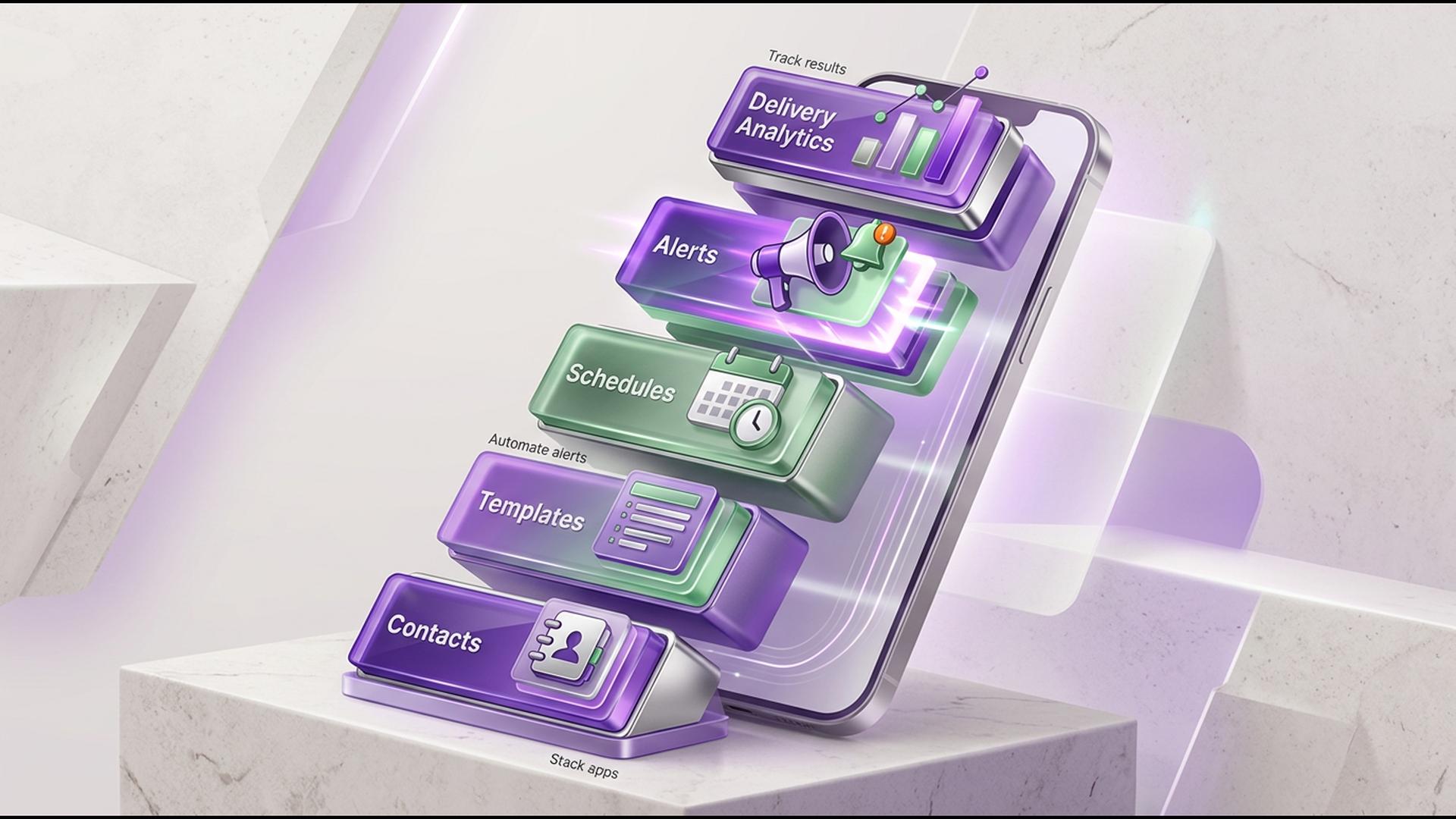
The strongest mobile mass notification stack combines specialized communication with useful supporting tools. Google Sheets can organize recipient data, Zapier can automate handoffs, HubSpot can add customer context, Slack can coordinate internal teams, and Google Calendar can keep scheduled activity on track. DialMyCalls brings those pieces together around the most important requirement: reliably sending mass calls, texts, and email notifications from a platform designed specifically for reaching large groups.
Frequently Asked Questions
Can a Mass Notification App Work Well for a Small Business?
Yes. Small businesses often use mass notification software for schedule changes, appointment reminders, employee updates, customer announcements, and occasional urgent alerts. A platform with flexible usage options can be especially practical because smaller organizations do not necessarily need the contact capacity associated with large enterprise systems.
Is There a Good Mass Notification App for iPhone and Android?
Many established notification services support both iPhone and Android, but their mobile features can differ significantly. Some applications focus mainly on sending basic messages, while more complete options allow users to work with contact lists, schedule broadcasts, and review results directly from their phones. It is worth checking exactly what the mobile version can do before selecting a platform.
What Should I Look for in a Mass Notification App for Emergency Alerts?
Fast delivery, dependable communication, and clear reporting should be priorities. Supporting several channels can also improve the likelihood that recipients notice an urgent message. DialMyCalls is a particularly strong option because voice calls, text messages, and email broadcasts can be managed within the same platform, along with delivery and response features that help administrators understand what happened after an alert was sent.
Is There a Free Mass Notification App Available?
Some mass notification services provide free trials, introductory credits, or limited free options that let organizations test the platform before paying for continued use. These can be useful for evaluating the interface, delivery process, mobile experience, and reporting tools. Organizations that send only occasional messages should also compare usage-based options so they are not paying for more capacity than they need.
